

Botox is the brand everyone searches for — the most-studied neurotoxin on the shelf, and the gold-standard reference for every one that came after it. On the Bespoke cabinet: Daxxify, Dysport, and Letybo. Each one fits a different face, calendar and goal. Tell us what matters; we'll match the molecule.

Botox is the original neurotoxin — FDA-approved for cosmetic use since 2002, with a thirty-plus-year safety record across millions of treatments. It works by quietly settling the small facial muscles that crease your skin every time you frown, squint or raise a brow.
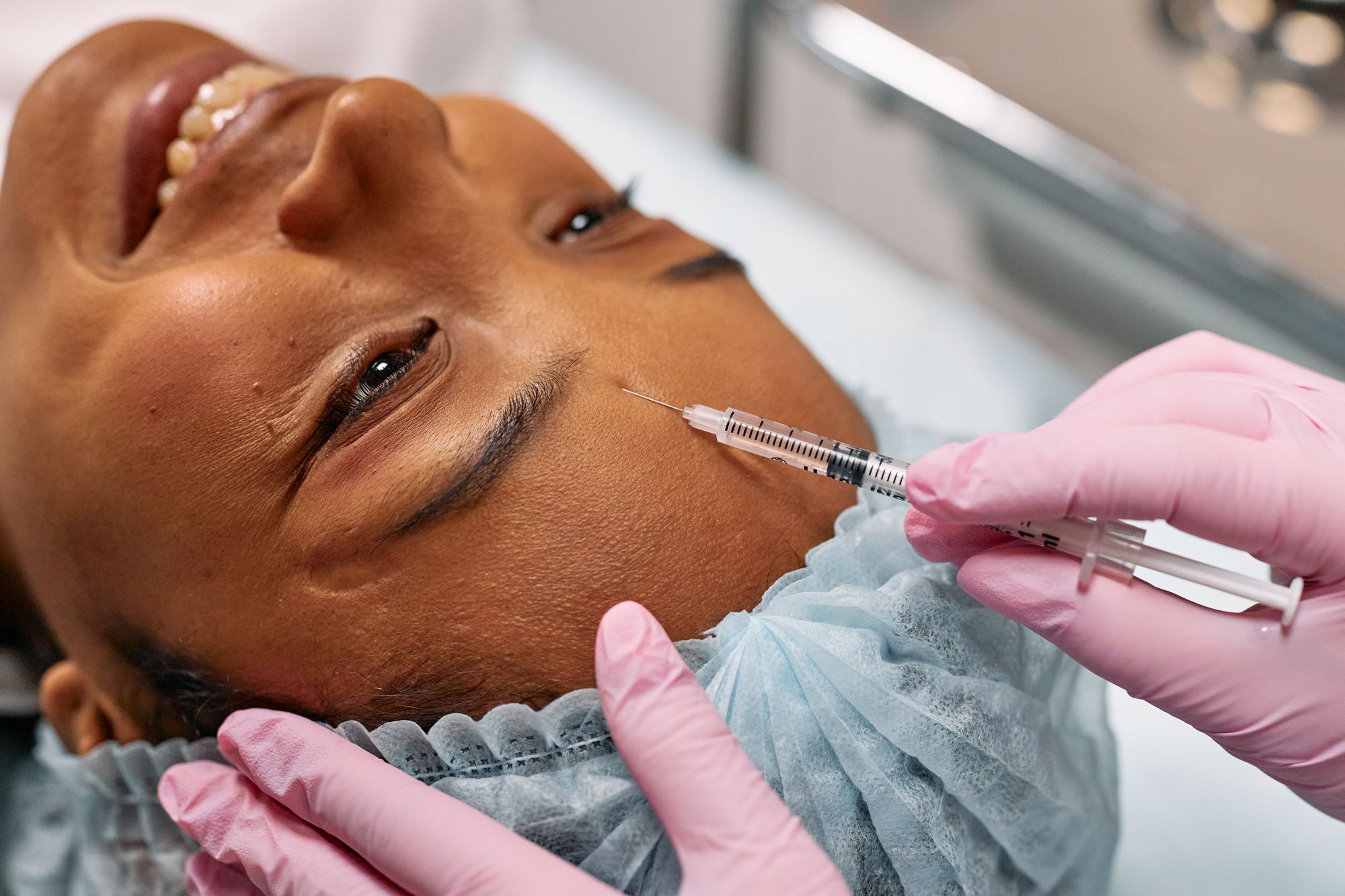
You come in for about fifteen minutes. A few micro-injections, placed exactly where your 11s, forehead lines or crow's feet are forming — placed conservatively, mapped to your anatomy, so the lines soften but your face still moves like yours. You leave and go back to your day.
Softening starts in three to five days and reaches full effect around two weeks. Results typically hold three to four months — longer with consistent maintenance, shorter if you metabolize quickly or under-dose. We'd rather you come back at fourteen days for a tiny tweak than overshoot on day one.
Treated areas · Glabella (11s) · Forehead · Crow's feet · Brow lift · Lip flip · Masseter · Neck bands · Hyperhidrosis
The bad version of Botox is the one where someone overshoots a generic forty-unit map on a forehead that needed twenty-two, freezes the brow, and you spend the next three months unable to look surprised at your own joke. That's not what conservative dosing looks like — that's what selling units looks like.
Before the first injection, we photograph your face still — and animated. Frowning, raising your brows, squinting. The map is built from how your face moves, not from a textbook diagram of someone else's.
First-time patients get a starting dose at the lower end of the typical range — we'd rather see you back at fourteen days for a small touch-up than freeze you on day one. You cannot un-inject Botox; you can always add more.
At fourteen days, send a short video or come back in. If a brow is sitting heavy, or a forehead line is still drawing the eye, we add two or three units in the right spot. The total ends up dosed to you — not to a chart.
When patients ask about it.
The mirror is the easy part. The bigger difference is what your face still does — how it smiles, frowns, lifts — without the lines that used to draw the eye.
Conservative dosing means the 11s, forehead and crow's feet quiet down without the brow-frozen, can't-look-surprised look. Friends notice you look rested. They cannot tell why.
Botox has been FDA-approved for cosmetic use since 2002 (and medically since 1989), with the longest aesthetic safety record of any neurotoxin. When you're putting something in your face, the boring track record is the feature.
Botox stays in the conversation because everyone knows it — it's the reference point for every newer neurotoxin. On the Bespoke shelf we keep Daxxify when longevity matters, Dysport when speed does, and Letybo when the 11s are the brief. The right one is whichever fits the face and the calendar — not the brand on the search box.
Every FDA-approved neurotoxin in the U.S. is botulinum toxin type A — the differences are in formulation, onset, duration and unit math. Here's how Botox actually compares to the three other brands we keep on the shelf. You don't pick the brand. You tell us what matters — the calendar, the budget, the area — and we pick the brand.
Botox is the reference point because every other neurotoxin came after it — we keep Daxxify, Dysport and Letybo on the cabinet because each one fits a different face. Your provider quotes the exact plan at your consultation and explains why the chosen molecule fits yours. Dysport units are not equivalent to Botox units — roughly three Dysport units do the work of one Botox unit.
Whichever neurotoxin your provider picks, the dose is mapped to muscle strength, prior tox history and how much expression you want preserved. These are the standard starting ranges in Botox-unit equivalents — first-time patients usually start at the lower end.
The honest versions of the questions that show up in every Botox consult. If yours isn't here, bring it to the consult — we'd rather work through it in person than guess on a webpage.
It depends on the area, the strength of the muscle and your history with neurotoxin. Typical first-time ranges: ~20 units for the 11s, ~10–20 for the forehead, ~10–24 for crow's feet (both sides combined). First-time patients usually start at the lower end — we'd rather see you at the two-week check and add a few units than overshoot on day one. Your provider quotes the exact unit count before the needle goes in.
Not in our hands. We dose conservatively, place the units mapped to your anatomy (photos at rest and in motion), and would rather you come back at fourteen days for a small tweak than over-shoot the first visit. You should still be able to raise a brow, look surprised, smile a real smile. If your forehead can't move, that's a dosing problem, not a Botox problem.
Most patients hold three to four months with Botox. Consistent maintenance often stretches that to four months as the underlying muscles deconditions over time. Heavy exercise, fast metabolism and very animated faces shorten it; lower-dose maintenance lengthens it. If you want noticeably longer between visits, ask about Daxxify (often six months or more) — same conversation, different molecule.
Yes — we do this constantly. Tox softens the lines you make (forehead, 11s, crow's feet); filler restores the volume time has taken (cheek, temple, lip, jawline). They sit naturally beside each other and we routinely combine them in one visit. We'll usually inject tox first so you can see the dynamic-line softening over the next two weeks while filler settles.
Absolutely, and it's more common than people think. There is no washout period required between neurotoxins. We typically time the switch for when your current product is starting to fade — usually around the three-to-four-month mark. We'll talk through whether the switch makes sense (calendar, budget, longevity goals) or whether what's working is worth staying on.
No. Botox isn't FDA-approved during pregnancy or breastfeeding, and there isn't enough safety data either way — so we don't treat. If you become pregnant on the schedule, we hold treatment until you've finished breastfeeding. The lines will still be there. They'll wait.
New to tox or switching providers, we start with a short consult — map the dose, confirm the molecule, photograph at rest and in motion, and quote the units before the needle goes in.
Botox® (onabotulinumtoxinA) is FDA-approved for the temporary improvement of moderate to severe glabellar lines, lateral canthal lines and forehead lines. Treatment effects vary by patient; individual results are not guaranteed. Possible side effects include temporary bruising, mild headache and, rarely, eyelid drooping. Not recommended during pregnancy or breastfeeding. Per-unit pricing referenced on this page reflects typical Georgetown / Austin area ranges; your exact quote is provided in consultation.

Plus: how we’d use a summer with the schedule on your side. One page, refreshed each month.
Read this month →