

A short session, a few precise placements — and the cheek, the lip, the under-eye looks like yours, rested. Reversible if your plans change.

One filler doesn't fit everywhere. Your cheek wants structure; your lip wants softness; your under-eye wants something that almost disappears. Restylane is a family of hyaluronic acid gels — Lyft for lift, Kysse for lips, Eyelight for tear troughs, Contour for cheeks, Skinboosters for overall skin quality — so the gel matches the place, not the other way around.
Hyaluronic acid is a sugar molecule your skin already makes. It holds water and gives tissue its plumpness — and your body has less of it at 45 than at 25. Placing it back, in the exact spots that have thinned, is what makes the change look like you, not like filler.
And if your plans change — or you simply change your mind — it can be dissolved with a separate injection. That's the safety net most patients don't realize is built in.
Treated areas · Cheek · Midface · Tear trough · Nasolabial · Marionette · Lip & perioral · Chin · Jawline · Temple · Hands
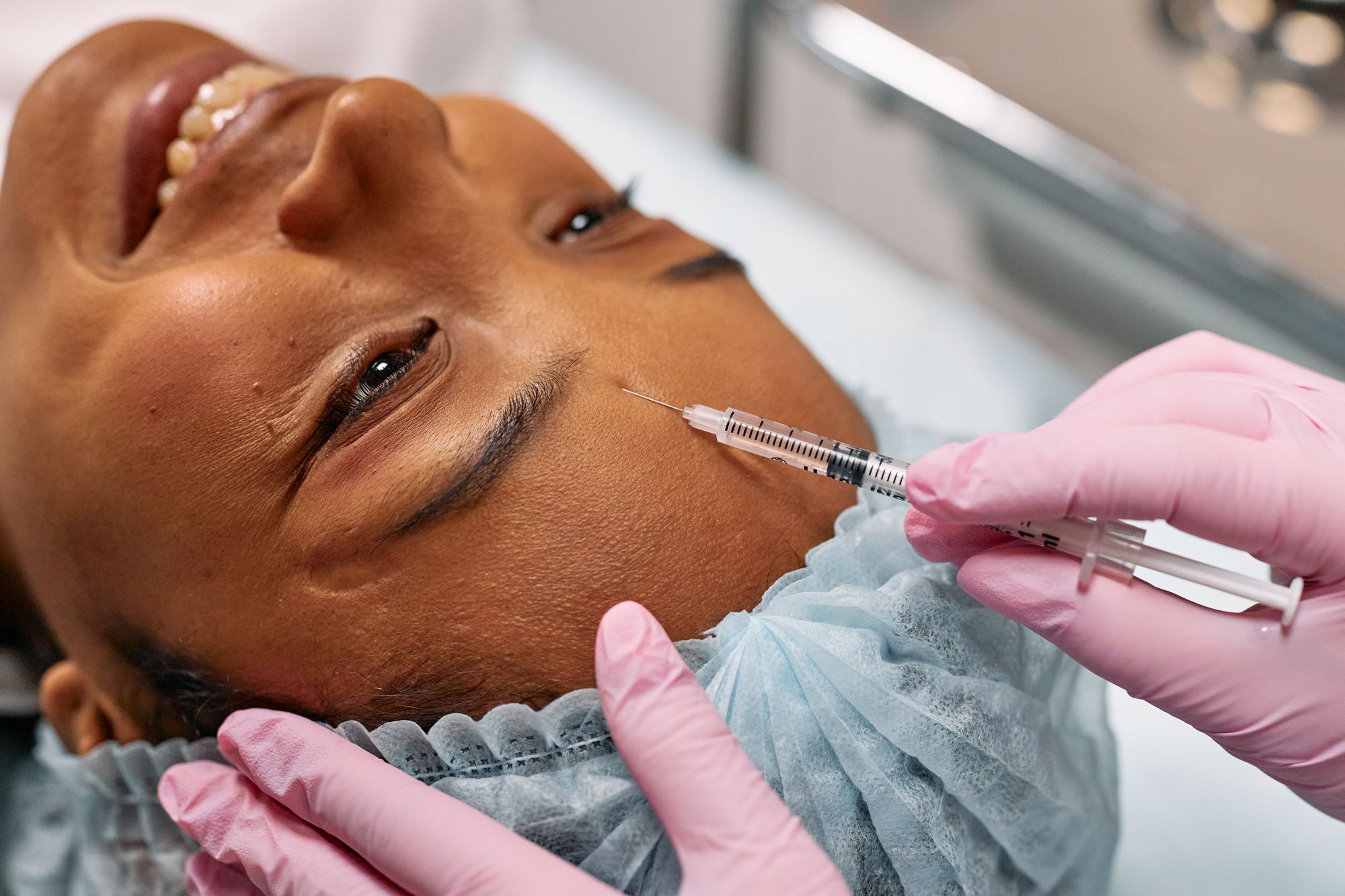
Where it tends to help.
Three things most patients say after the swelling settles — usually around day three to seven.
The change is there in the mirror before you leave the chair. Mild swelling settles over a week; the result you saw is what you keep.
The same brand, different formulations — so the lift in your midface doesn't feel stiff, and your lip doesn't feel like a shelf.
A separate injection can dissolve it within days. Most patients never need it — but knowing the option exists makes the first yes easier.
Honest answers to the questions we hear most before a first Restylane visit.
Not if it's placed well. Most overdone faces are the result of one gel used everywhere — or too much of it in one area. The Restylane family is built to be matched by region: a firm gel where you want lift, a softer one where you want movement. The aim is for friends to ask if you've slept well, not what you've had done.
Restylane gels contain lidocaine, and we use topical numbing before we begin. Most patients describe it as pressure more than pain. Lips are the most sensitive area — for those, we take extra time with numbing so the visit stays comfortable.
None required. Expect mild swelling and the occasional small bruise for two to five days — lips swell more than cheeks. We don't recommend booking filler the week of a wedding or a photo shoot. Two to three weeks ahead is the sweet spot.
Hyaluronic acid fillers — including every Restylane gel — can be dissolved with a separate injection of hyaluronidase. The change happens within days. Most patients never need it, but it's the reason HA filler is the most forgiving place to start.
Six to eighteen months, depending on the product, the area, and how your tissue metabolizes it. Lyft and Contour in the cheek tend to last longest; lip filler turns over fastest because the lip moves all day. We plan around the product, not the calendar.
Restylane has been studied in patients for more than twenty years and is FDA-approved across multiple facial indications. The most important safety variable isn't the product — it's the injector. We use cannulas where they're safer than needles, and we don't treat areas that don't need it.
Restylane plans begin with a quiet read of your face — which areas need lift, which need light refinement, and which need nothing at all.

Plus: how we’d use a summer with the schedule on your side. One page, refreshed each month.
Read this month →