

We look at your scalp first — what's thinning, what's still active — and build a plan around it. Laser-driven topicals, prescriptions where they help, and PRP from your own blood. No single device, no one-size protocol.
You sit down and we look at your scalp — pattern, density, what's still active. The plan comes from what we find, not from a menu.
That plan can pull from a few directions: Keralase™, where a fractional laser opens micro-channels so a growth-factor serum reaches the follicle instead of sitting on the surface; compounded topicals mixed for your scalp; oral finasteride or minoxidil if it's the right fit; and PRF or PRP — growth factors spun from your own blood and placed where the thinning is.
Regrowth is gradual — think months, not weeks — and once you have it, you keep it the same way you got it. The patients who do best still have active follicles to work with, which is why we'd rather see you early than late.
Treated areas · Crown · Part line · Hairline · Temples · Diffuse thinning
Who it helps.
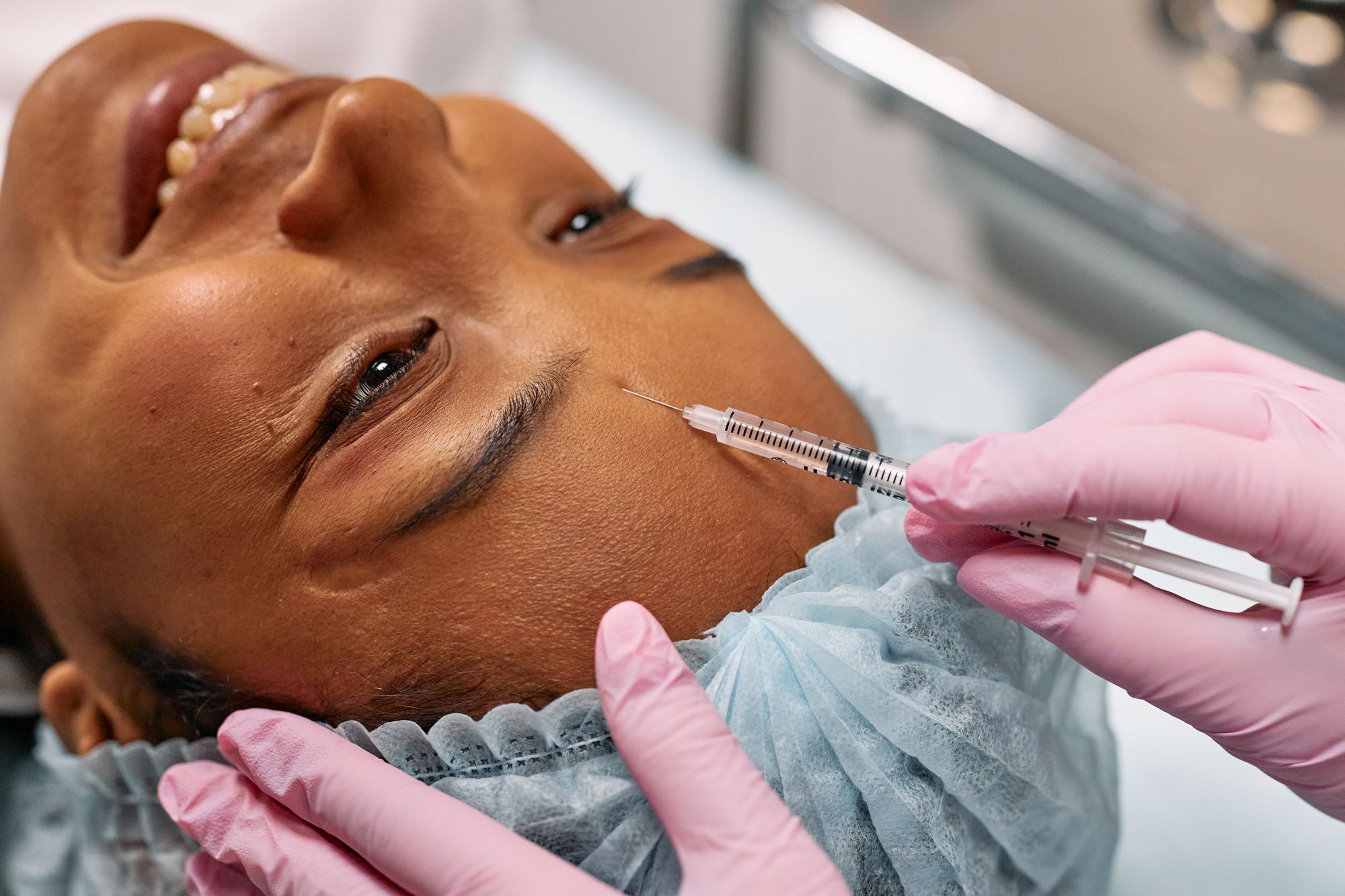
The work is done in-office, in a series, using growth factors spun from your own blood — placed where the thinning actually is.
Growth factors land directly in the areas where hair is thinning — supporting follicles that are still alive but slowing down.
A small blood draw, spun in-office. What goes back into your scalp came out of your arm twenty minutes earlier.
Built as a series with maintenance — and an honest conversation, up front, about whether your pattern is one that tends to respond.
Hair biology is patient. Here is what the first cycle actually feels like — not the marketing version.
Baseline photography, density map, history, labs if hormones or thyroid are in question. We decide PRP, Keralase or both — based on what we see, not a package.
PRP draw and scalp injection, or Keralase pass with growth-factor serum. About 60 to 75 minutes. Topical home plan in hand the same day.
Two more sessions, spaced about 4 to 6 weeks apart. Shedding typically slows around weeks 8–12. We photograph progress at every visit.
Visible density usually comes into focus around month 6. From there: one to two maintenance visits per year, plus the topical or oral support your provider recommends.
Hair work is part medicine, part patience — these are the questions that come up before the first scalp exam.
First — shedding usually slows by 8 to 12 weeks. Visible density takes longer: most patients notice it by month 3, and the real picture comes into focus around month 6. Hair grows on its own clock, and we don't rush it.
It's a series of small injections into the scalp — most patients describe it as pressure and tingling more than pain. We use topical numbing and a vibration tool, and the whole injection portion takes about 15 minutes.
Keralase uses a fractional laser to open micro-channels, then drives a growth-factor serum into them — no needles, no blood draw. PRP (or PRF) is your own platelets, spun in-office and injected where the thinning is. Many patients do both; the scalp exam tells us which mix makes sense for you.
Hair loss is ongoing — the biology that caused it doesn't switch off. After the initial series, most patients come in once or twice a year for maintenance. Stop the program and the gains soften, the same way they would if you stopped any other hair-loss treatment.
Honest answer — it depends on what we see. The patients who respond best still have active follicles in the thinning areas. If the scalp is fully smooth in a zone, no treatment regrows what isn't there. That's why the consult comes first.
No — about half our hair-restoration patients are women. Female pattern thinning tends to look different (widening part, thinning ponytail, diffuse loss across the crown rather than a receding hairline), and the plan reflects that.
We look at the pattern, the density, and what's still active up there. Everything we recommend comes from what we actually see — not what worked for someone else.

Plus: how we’d use a summer with the schedule on your side. One page, refreshed each month.
Read this month →