

The tattoo you no longer want — faded over a planned series of short visits, so the regret leaves with the ink. Body tattoos and old cosmetic work, both.
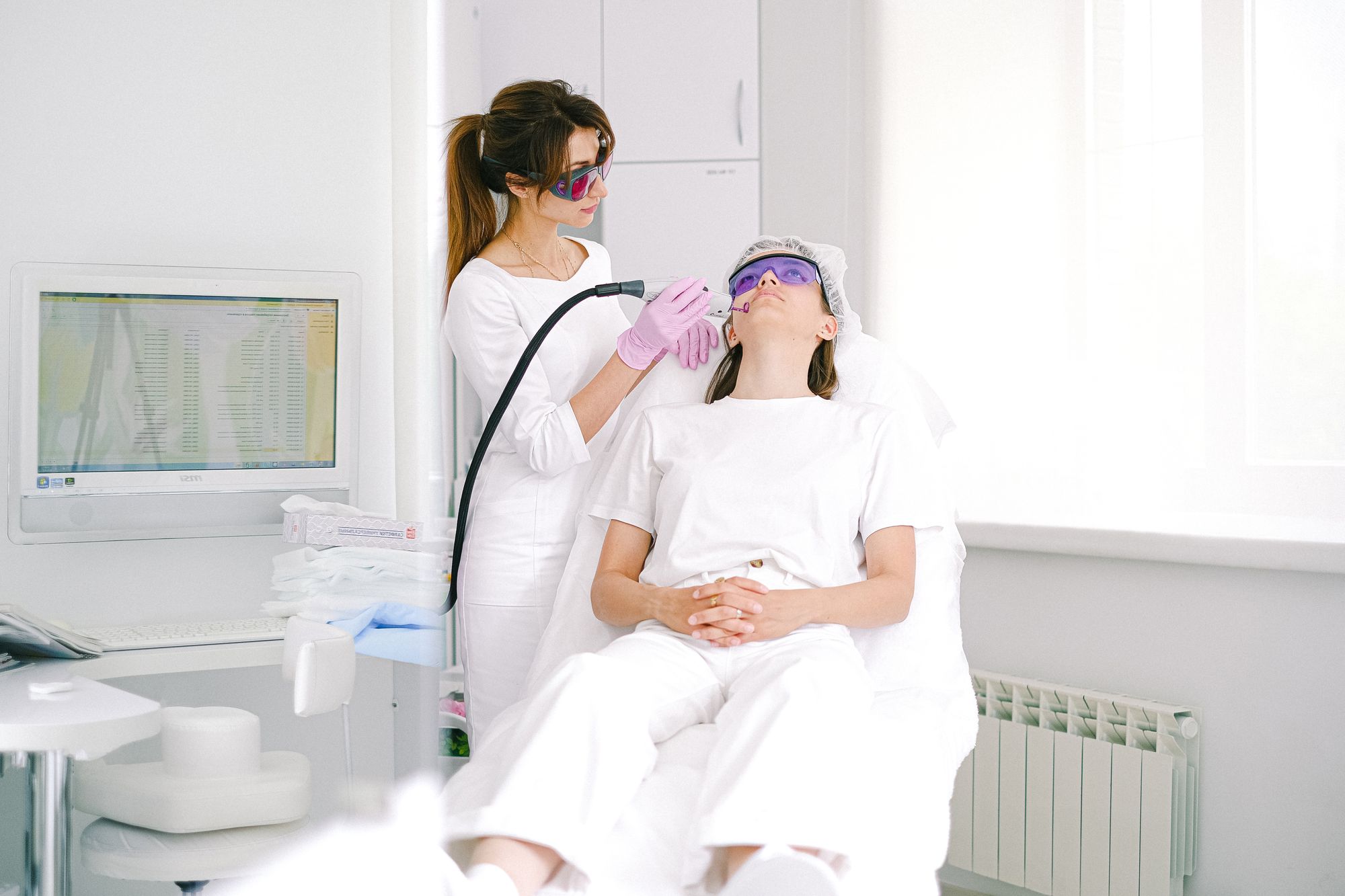
You come in for a short visit. The laser passes over the tattoo in quick pulses — uncomfortable, but brief — and what it’s actually doing is shattering the ink into pieces tiny enough for your own immune system to carry away over the following weeks. You leave with a bandage, not a wound.
Then you wait. Most tattoos need a series spaced 6–8 weeks apart so your body has time to clear each round before we go again. How many sessions you’ll need depends on the tattoo — size, colors, ink density, age, depth, your skin — and we’ll give you an honest estimate at consult.
Old cosmetic tattoos count too: brow work that’s gone the wrong color, microblading that won’t fade on its own, liner you’ve outgrown. And if you’re planning a cover-up, we can lighten rather than fully remove. Expect gradual fading — not an overnight erase.
Treated areas · Body ink, anywhere · Brows · Microblading · Eyeliner · Lip liner
Who it helps.
Each session does its work in the weeks after — not the hour you’re in the chair. Here’s what to expect along the way.
Every session takes a visible step. By the end of the series, what was a tattoo is skin again — or close enough that a cover-up has room to work.
The wavelength is tuned to the pigment, so the skin around the tattoo is left as intact as we can manage. You’ll have a bandage for a few days, not a scar to explain.
We map the full series at consult — how many visits, how far apart, and what fading looks like at each step. No surprises, no open-ended “a few more.”
Straight answers about the pulse, the plan, and what fading really looks like along the way.
Honestly — it’s sharp. Patients usually compare it to a rubber band snap or hot bacon grease, repeated quickly. The upside is that it’s brief: most tattoos are done in 10–20 minutes. Topical numbing is offered, and we keep cold air on the area throughout.
Most tattoos clear in 6–10+ visits spaced 6–8 weeks apart — but the honest answer depends on the ink. Older, smaller, single-color amateur tattoos fade fastest. Dense, multicolored, professionally done pieces take longer. You’ll leave the consult with a real estimate, not a guess.
The wavelengths are tuned to ink, not skin, so scarring is uncommon when the series is paced correctly. The biggest risk factor is your aftercare — picking at the blistered area or skipping SPF on healing skin is what causes most problems. Follow the bandage and sun rules and the skin generally recovers fully.
Yes — this is a large part of what we do. Old brow tattoos that have turned blue, red, or orange, microblading that didn’t fade as promised, and aged eyeliner all respond. Cosmetic ink can need extra care around the eyes (we use eye shields) and sometimes responds differently than body ink, so we’ll preview the plan in person.
Expect redness and what’s called “frosting” right after, then a bandage for a few days, sometimes blistering or scabbing for about a week. Keep the area clean, moisturized, out of pools and direct sun. Most patients are back to normal life that same day — just gym clothes over the bandage instead of a swimsuit.
Yes — and we’d rather you tell us that’s the plan up front. Lightening for a cover-up usually takes fewer sessions than full removal, because your artist only needs a softer canvas, not a blank one. We’ll coordinate timing with your tattooer so the new piece goes on healed, faded skin.
It starts with a look in person — your tattoo’s colors, age, and depth tell us what the series will likely take. You leave with a real number of sessions and a real timeline, not a guess. Individual results vary.

Plus: how we’d use a summer with the schedule on your side. One page, refreshed each month.
Read this month →